How to split group trip expenses fairly
A practical guide for trip organizers on splitting group travel costs fairly, with real steps, examples, and the mistakes to avoid.

You booked the campsite on your card. Two families bought groceries. One friend grabbed firewood and ice on the way up, another covered the boat rental. Three days later, you're staring at a pile of receipts and a group chat full of "wait, who paid for what?" — and somehow you're the one expected to sort it out.
If that's you, this guide is for you. By the end, you'll know how to split group trip expenses without spreadsheets, awkward math, or chasing people for money. Let's calm the chaos.
Why group travel cost sharing gets messy
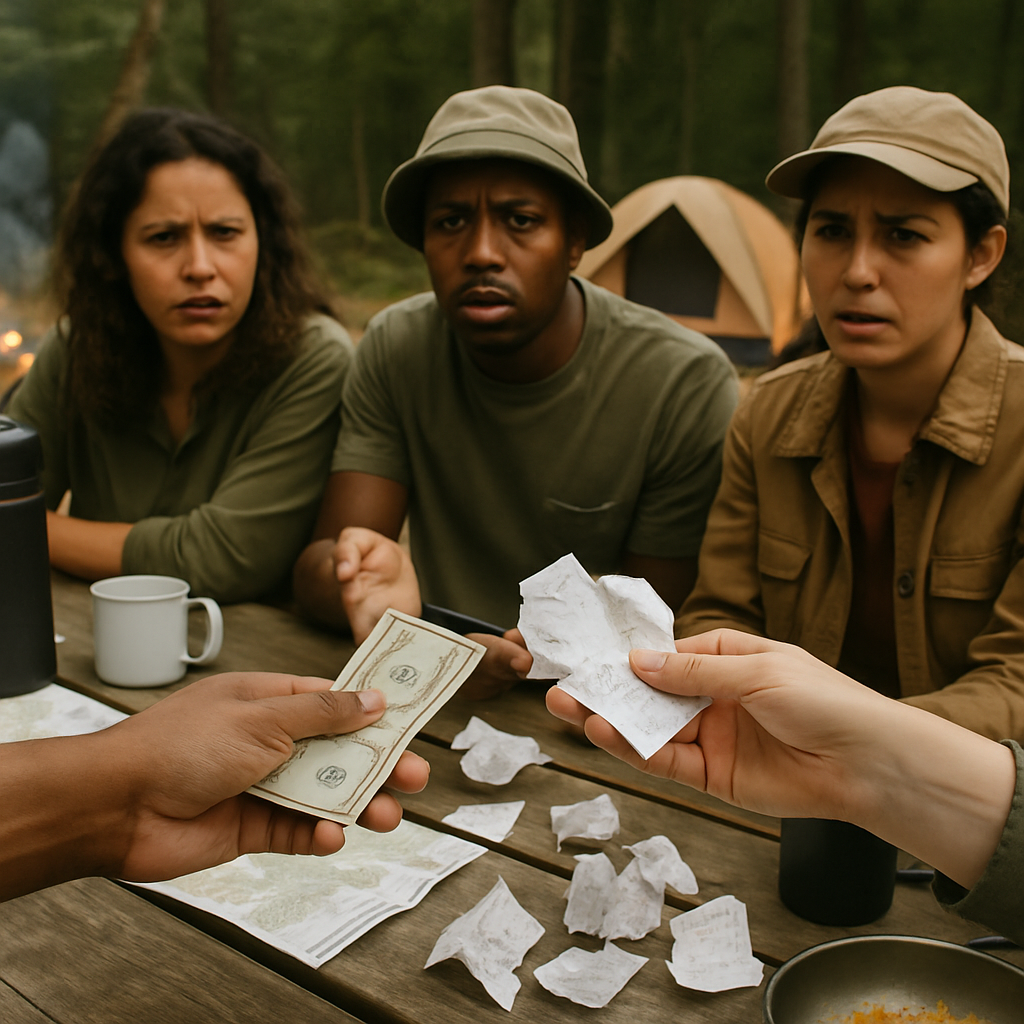
The trouble is rarely the money itself. It's that costs land on different people, at different times, in different amounts.
A few things make group travel cost sharing harder than it should be:
- Costs are scattered. One person pays the site fee, another buys food, a third covers gas. No single list shows the full picture.
- Not everyone uses everything equally. A family of four eats more groceries than a solo hiker. Two people split a kayak the rest never touch.
- Memory fades fast. By the time you're home, nobody remembers who covered the $14 bag of ice.
- Nobody wants to be the nag. Asking friends for $23 feels weird, so people let it slide — and resentment quietly builds.
You can't fix all of that with a better attitude. You fix it with a simple system you set up before the trip.
Set the money rules before you leave
The single biggest mistake organizers make is waiting until the trip is over to talk about money. Have the conversation up front, when everyone's excited and nobody owes anything yet.
Here's what to settle before you go:
- What's shared vs. personal. Shared: campsite, group meals, firewood, communal gear rentals. Personal: someone's fancy coffee, a souvenir, a solo zipline ticket. Write the line down so it's not a debate later.
- How you'll split shared costs. Pick one method (more on this below) and say it out loud so nobody's surprised.
- Who fronts what. Spread the big purchases around so one person isn't floating the whole trip on their credit card.
- When you'll settle up. Set a date — say, "everyone squares up within a week of getting home." A deadline keeps it from dragging on for months.
Five minutes of this conversation saves you an hour of cleanup later.
Pick a splitting method that fits your group
There's no single right way to split. There's the way that fits your group. Here are three that cover most trips.
Even split: simplest, best for similar groups
Everyone pays an equal share of the total. Works great when people use roughly the same stuff.
Say eight friends spend $640 total on a weekend trip:
- $640 ÷ 8 = $80 per person
Done. No itemizing, no arguing. The catch: it feels unfair when usage really varies — like if two people didn't drink and the bar tab was half the bill.
Split by household or tent: best for families
When families come along, split by group instead of by head. It matches how costs actually happen.
For a trip with three families sharing $900 in costs:
- Split evenly: $300 per family
- Split by people (if the families are 4, 3, and 2 — nine people total): $100 per person, so $400, $300, and $200
Pick per-person when family sizes differ a lot, especially for food. Pick per-household for fixed costs like one campsite everyone shares equally.
Itemized split: best when usage really varies
Some costs should only be shared by the people who used them. The boat rental gets split among the four who paddled, not all twelve.
The trick is to keep itemized splits for the few things that matter — big or lopsided costs — and even-split everything else. If you itemize every bag of marshmallows, you'll lose your mind.
A real example: 8 people, 3 days
Let's make this concrete. Eight adults, a long weekend, here's how the money lands:
- Campsite (2 nights): $180
- Groceries for group meals: $240
- Firewood and ice: $60
- Two kayak rentals (4 people used them): $80
- Gas, two cars: $120
Shared by everyone — campsite, groceries, firewood, gas:
- $180 + $240 + $60 + $120 = $600
- $600 ÷ 8 = $75 each
Shared by the four paddlers — kayaks:
- $80 ÷ 4 = $20 each
So four people owe $75, and four owe $95. Now picture who actually paid:
- You: campsite ($180) + gas for your car ($60) = $240
- Friend A: groceries ($240)
- Friend B: firewood, ice, kayaks ($140)
- Friend C: gas for the second car ($60)
Instead of everyone paying everyone back in a tangle, you net it out: each person's share minus what they already paid. The people who fronted big costs get money back; everyone else sends their part. That's the whole game — track what's owed, then settle in as few payments as possible.
Track expenses as they happen, not after
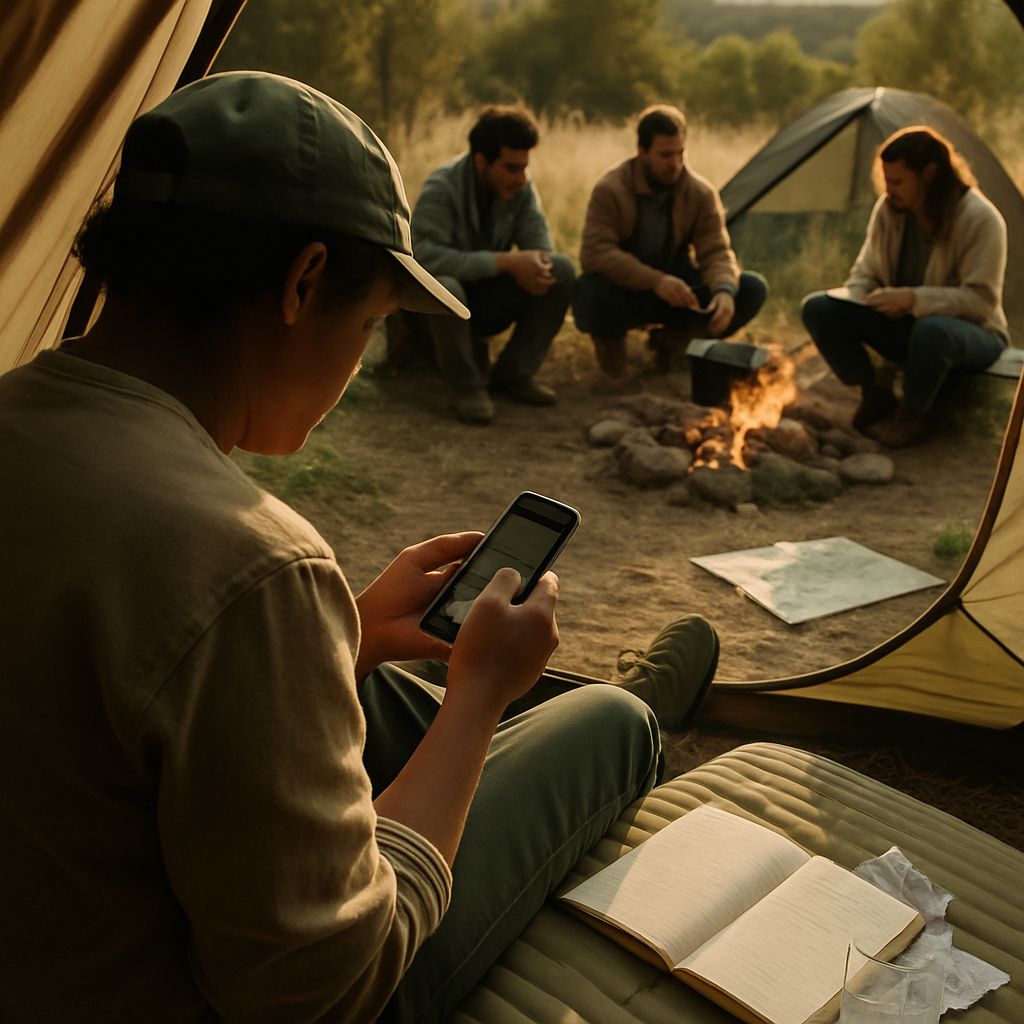
The cleanest split in the world falls apart if you're reconstructing receipts from memory a week later. The fix is to capture each cost the moment it happens.
A few habits that make this painless:
- Log it on the spot. Right after someone pays, jot the amount, what it was, and who's sharing it. Ten seconds at the register beats an hour at the kitchen table.
- Snap a photo of receipts. You don't need fancy tools — a photo in a shared album keeps the proof handy if a number's ever in question.
- Tag who's in. Note whether a cost is whole-group or just a few people, while you still remember.
- Keep one running total. Everyone should be able to glance at the same list and see where things stand.
This is exactly the kind of thing RallyCamp is built for. You can track and split group expenses, and settle up later, all in the same place you're already managing the trip. Your packing list, shared schedule, headcount, and expenses live together — no more scattered spreadsheets and group chats. When the trip's running costs sit next to everything else, nobody has to play detective at the end.
Common mistakes that sour the trip
You can dodge most money friction by sidestepping these.
- Letting one person front everything. It's a real loan, and it breeds quiet resentment. Spread the big purchases around.
- Splitting things that should be personal. Don't make the whole group chip in for one person's $40 trail run entry. Keep personal stuff personal.
- Ignoring small costs until they add up. "Don't worry about the ice" five times is $50 nobody tracked. Log the little ones too.
- Waiting too long to settle. The longer you wait, the fuzzier the memories and the harder the ask. Square up within a week.
- Rounding in your own favor. Even by accident, it erodes trust. Use the real numbers — that's what tracking is for.
- Surprising people with the method. If you decide to split by household but never said so, expect pushback. Agree on the rule first.
A pre-trip money checklist
Run through this before you leave and you'll have almost nothing to untangle later:
- Name a money point person. Usually you. One person keeps the running list so it doesn't fragment.
- Write down shared vs. personal. A two-line list everyone can see.
- Choose your split method. Even, by household, or itemized for the big lopsided stuff.
- Spread out who fronts costs. Assign the campsite to one person, groceries to another, gas to a third.
- Set a settle-up date. "Within a week of getting home" works.
- Pick where you'll track it. One shared place everyone can open — not five different notes apps.
- Decide how you'll pay each other back. Agree on the payment app or method up front so settling is quick.
Tape it to the fridge, drop it in the group chat, whatever gets everyone nodding before you hit the road.
The takeaway
Fair money on a group trip isn't about being strict — it's about being clear early and tracking as you go, so nobody's stuck doing math or chasing friends at the end. Split trip costs fairly and transparently, and money never sours the trip.
Your one next step: before your next trip, decide your split method and name who's tracking the costs. Settle that one thing, and the rest gets a whole lot easier.